
Good Software Is the Result of Good Decisions Made Early.
Most software problems are not caused by poor execution. They are caused by decisions made too late, with incomplete context. Our way of working is designed to reduce uncertainty early, so execution becomes predictable later.
This is why code is never our starting point.
User Journeys Come
Before Interfaces
User journeys are not UX artifacts for us they are system inputs. We map:
End-to-end journeys
across roles
1
Entry points, exits,
and drop-offs
2
Happy paths and
failure paths
3
Dependencies between
users and systems
4
These journeys help answer questions like:
Where does responsibility shift?
Where does ambiguity creep in?
Where would a small failure have large impact?
User Journeys Come Before Interfaces
User journeys are not UX artifacts for us they are system inputs. We map:
1
End-to-end journeys across roles
2
Entry points, exits, and drop-offs
3
Happy paths and failure paths
4
Dependencies between users and systems
These journeys help answer questions like:
• Where does responsibility shift?
• Where does ambiguity creep in?
• Where would a small failure have large impact?
Conceptualisation & System Design
Once journeys are understood, we move into conceptualisation the most critical phase of our work. This is where we design:

Core System Boundaries
Defining where the system starts and ends.
Identifying how we communicate with external tools.
Setting the physical and logical constraints of the build.
Key Entities & Relationships
Mapping the "actors" within your digital ecosystem.
Establishing how information flows between departments.
Ensuring data integrity across complex interactions.
States & Transitions
Defining every possible status a user or object can have.
Designing the "rules of movement" within the app.
Accounting for errors, timeouts, and edge cases.
Ownership & Responsibility
Clarifying which part of the system "owns" a specific task.
Ensuring modularity for easier future updates.
Defining accountability for data and security.



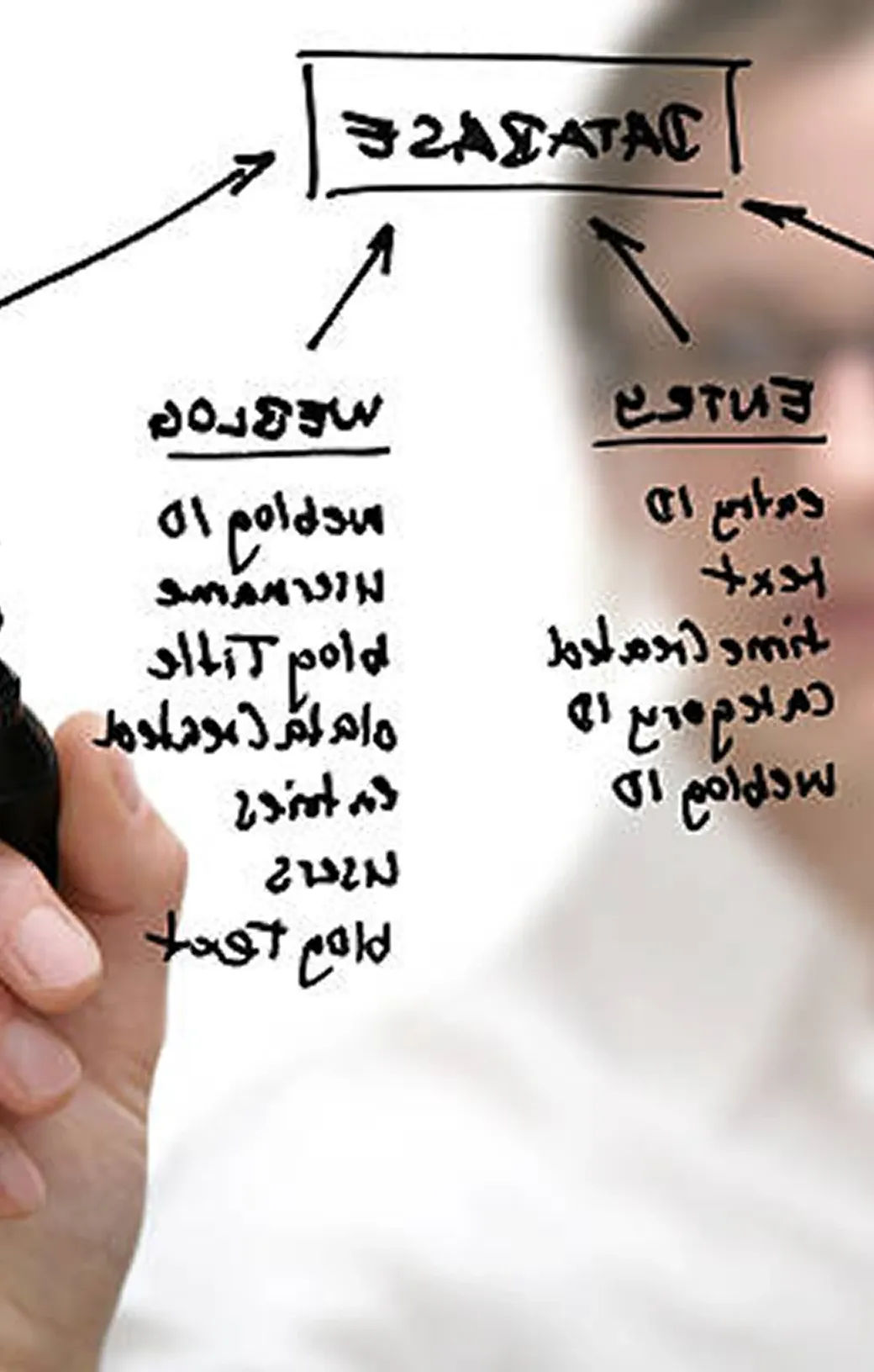
These are not formalities.
They are tools for thinking clearly about consequences.
Design as Validation, Not Decoration
Design follows system clarity not the other way around.
Validate Assumptions
Every pixel serves as a testable hypothesis. If a user journey breaks in a static layout, the logic is inherently flawed.
Expose Edge Cases
Visualizing data extremes reveals where components fail, avoiding “ideal-path” bias before production.
Test Workflows Visually
Rapid prototyping replaces lengthy documentation. We see the friction before a single line of code is committed.
Reduce Ambiguity
Handoff is not a throw-over-the-wall event. It is a verified roadmap that eliminates the “interpretive” cost of engineering.
If something feels confusing here,
it will be expensive later.
Interfaces are Decided by Logic,
Not Preference.
By the time we recommend an interface , a web application, a mobile app, an internal dashboard, an API. We already know what it needs to do, who will use it, and where. Interface recommendations follow directly from journey findings.
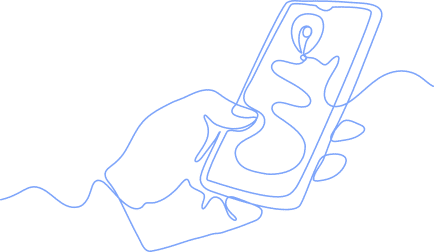
A field operative who works offline, in variable conditions, capturing structured data at a physical location requires a native mobile application with local storage and sync logic. Not because it looks good because the journey demands it.
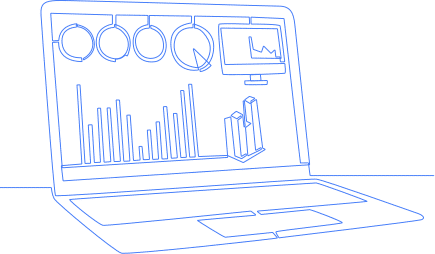
An operations manager monitoring exceptions across multiple workflows from a fixed workstation requires a dense, data-rich web dashboard with real-time state. Not because dashboards are fashionable — because that is what the role requires.
Real Work, Real People
We don’t outsource thinking. Our team is directly involved in:
Discovery Discussions
Journey Mapping
System Design
Design Validation
Execution and Handover
What This Way of Working
Achieves
We use concept notes, reviews, sprints, tickets, and documentation, not as rituals, but as safeguards.
Fewer surprises during delivery
Systems that teams can inherit safely
Software that adapts without constant rework
Confidence in making changes